As soon as spring rolls in, rhubarb makes its entrance, with those striking pink stalks that feel like a little promise of warmer days ahead. It shows up just as outdoor lunches, garden gatherings, and vibrant desserts start calling our name, and suddenly, everything feels a bit more alive. Sadly, the season is famously short-lived, often vanishing before we have had our fill.
That is exactly why preserving rhubarb is such a brilliant idea. Rhubarb’s tart and sharp nature is far too good to lose once the summer heat takes over. In this guide, we walk you through the 7 best ways to preserve rhubarb, so you can enjoy a taste of spring all year round.
1. Freezing
Freezing is the easiest and most practical way to preserve rhubarb. It takes almost no effort and gives you a ready-to-use ingredient whenever you feel like baking or cooking.
How to freeze rhubarb:
- Rinse the stalks and cut them into small, even pieces. If you like, blanch them for 1–2 minutes to help preserve their colour and texture, though this is not essential.
- Spread the pieces out on a tray in a single layer so they can freeze separately.
- Once the pieces are frozen solid, transfer them to freezer bags or containers.
- Divide them into portions, so you can take out only as much as you need at a time.
Once frozen, the rhubarb is easy to use straight from the freezer in all sorts of desserts. It works especially well in recipes such as our


so you can enjoy rhubarb long after the season ends.
2. Sugar preservation
Preserving rhubarb with sugar is one of the most reliable methods to extend its shelf life, especially in the form of jam. The sugar helps protect the mixture from spoilage, allowing it to keep much longer than fresh rhubarb.
As rhubarb is naturally low in pectin, it usually needs a little help to set properly. You can do that with jam sugar, added pectin, or by combining it with fruit that is naturally higher in pectin, such as apples or citrus.
How to preserve rhubarb with sugar:
- Cut the rhubarb into small pieces.
- Cook it with sugar over a medium heat.
- Add pectin, jam sugar, or pectin-rich fruit if needed.
- Simmer until the mixture thickens.
- Pour it into sterilised jars and seal while still hot.
Rhubarb jam is always great to have on hand for toast, baking, and desserts, and

or

are both good recipes to start with.
3. Bottling
Bottling is a practical way to store cooked rhubarb for longer, especially in the form of compotes or stewed mixtures. You spoon the rhubarb into sterilised jars while it is still hot and seal them straight away. As the jars cool, a vacuum forms, helping to extend shelf life and prevent any spoilage.
Unlike jam making, where sugar does most of the preserving, bottling depends mainly on a proper seal. That makes it perfect for recipes that are cooked and jarred hot but do not rely on a high sugar content to keep well.
How to bottle rhubarb:
- Cook the rhubarb into a compote or stewed mixture.
- Spoon it into sterilised jars while still hot.
- Seal the jars immediately.
- Leave them to cool completely so the vacuum can form.
Try the bottling method with our recipes for:

or

4. Syrups and cordials
Turn rhubarb into a syrup or cordial to preserve its flavour in liquid form. The main difference lies in how they are used. Syrup is thicker and ready to drizzle over desserts, while cordial is lighter and usually diluted with water, making it ideal for drinks.
How to turn rhubarb into syrup and cordial:
- Chop the rhubarb into pieces.
- Cook it with sugar and a small amount of water to draw out the flavour. For a syrup, let the rhubarb juices simmer until they reduce slightly and become a little thicker. For a cordial, stop once the rhubarb has softened and released its flavour into the liquid.
- Strain through a fine sieve to remove the cooked rhubarb pieces.
- Pour the liquid into sterilised glass bottles with airtight lids.

works well diluted with still or sparkling water, stirred into lemonade, or added to iced tea. Rhubarb syrup is better suited for pouring over pancakes, waffles, yoghurt, or ice cream.
5. Pickling
Pickling takes rhubarb into the world of savoury preserves, trading the intense sweetness for a sweet-sour flavour. This method uses vinegar and sugar to keep the rhubarb fresh for months. Once the rhubarb is placed in sterilised jars and covered with the hot pickling liquid, it begins to soften slightly and absorb the surrounding flavour.
A mild vinegar, such as white wine vinegar or apple cider vinegar, usually works best. It adds enough sharpness without overpowering the rhubarb.
How to pickle rhubarb:
- Cut the rhubarb into evenly sized pieces.
- Heat equal parts vinegar and sugar over medium heat until the sugar dissolves, adding water if you prefer a milder tang.
- Place the rhubarb in sterilised jars.
- Pour over the hot pickling liquid so the rhubarb pieces are fully covered.
- Seal the jars and let them cool completely.
Store the cooled jars in the fridge and leave the rhubarb to absorb the pickling liquid before serving. Pickled rhubarb pairs especially well with roasted meats, cold cuts, grain bowls, sandwiches, and cheese.
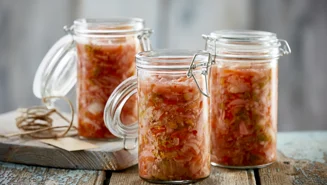
6. Fermenting
Fermenting rhubarb yields a different kind of preserve, using salt and time rather than vinegar or large amounts of sugar. During lacto-fermentation, the rhubarb develops a tangy, slightly more complex flavour of its own, with a softer sharpness than a typical pickle.
How to ferment rhubarb:
- Cut the rhubarb into uniform pieces.
- Place it in a clean jar and cover with a light saltwater brine, using about 20 g of salt per litre of water.
- Place a small weight inside the jar, such as a clean glass or fermentation weight, to keep the rhubarb fully submerged.
- Cover the jar loosely rather than sealing it tightly.
- Leave it to ferment at room temperature, opening the jar briefly from time to time to release pressure.
- Taste it as it ferments, then move it to the fridge once it has a flavour you like.
The cold slows the fermentation, though the flavour will continue to develop gradually over time. Fermented rhubarb is excellent in savoury dishes such as salads, sandwiches, and meals with rich meats. It can also add a sharp contrast to yoghurt, porridge, cakes, or creamy desserts.
7. Drying
Drying preserves rhubarb by removing its moisture, which helps it keep much longer and makes it easier to store. As the pieces dry, their flavour becomes more concentrated, giving the rhubarb a deeper, more intense taste.
How to dry rhubarb:
- Cut the rhubarb into thin, even pieces.
- Arrange them in a single layer.
- Dry them in a dehydrator or in the oven at around 50–60 °C until they feel dry and slightly chewy.
- Let them cool completely before storing them in airtight containers.
Dried rhubarb is easy to use in everyday cooking. It is perfect for granola, baked goods, or as a topping for yoghurt, and you can also soak it to soften it before using it in desserts.
3 tips for preserving rhubarb at home
When you are ready to preserve your rhubarb, keeping a few simple principles in mind can significantly improve your results. Everything from how you choose your rhubarb to the way it is handled and eventually stored plays a vital role in its longevity. These 3 tips highlight the most impactful steps in the process, so your home-preserved rhubarb turns out perfectly every single time.
Use fresh, firm rhubarb
Good preservation starts with good ingredients. Choose stalks that feel crisp and firm rather than soft, bendy, or limp. If it is looking a bit tired or dehydrated, it will likely break down too rapidly during the preserving process and will not keep as well.
Use sterilised glass jars and bottles
Always use clean, sterilised glass jars and bottles to keep your preserves safe and help them last longer. Any bacteria left behind can affect both the flavour and shelf life.
Wash the jars and lids thoroughly in hot, soapy water, then rinse them well. Sterilise the jars by placing them in an oven at around 100–120 °C for 10–15 minutes or by submerging them in boiling water. You do not need to dry them, as long as they stay clean and warm. Keep the lids in hot or boiling water instead, since high oven heat can damage the seals.
When it is time to fill them, match the temperatures. Spoon hot food into hot jars and seal them straight away to create a vacuum.
Store in the right place
Store your preserves properly to keep every jar, container, and bottle at its best.
Keep sealed jars of jam, bottled compote, syrup, cordial, and pickled rhubarb in a cool, dark place such as a cupboard or pantry. They will usually keep for 6–12 months unopened. Once opened, move them to the fridge and use them within 1–2 weeks.
Store dried rhubarb in an airtight container in a cool, dry place, where it can keep for up to a year as long as you protect it from damp and humidity.
Keep fermented rhubarb in the fridge for around 1–3 months, while frozen rhubarb will stay in good condition for 8–12 months.
More ways to cook and enjoy rhubarb
Once you have preserved and stored your rhubarb, you can start using it in all sorts of recipes, from light summer tarts to more comforting puddings later in the year. It is a wonderfully versatile ingredient that suits both simple everyday bakes and more elegant desserts for special events.
To get to know it better, take a look at All you need to know about rhubarb and How to cook with rhubarb. If you want to get started straight away, easy and simple rhubarb recipes offer plenty of ideas, while rhubarb dessert recipes and rhubarb and strawberry recipes are perfect when you are in the mood for something sweeter. When it is time to turn on the oven, explore our collections of rhubarb crumbles