In the world of cheese, most varieties are defined by how beautifully they melt. But paneer and halloumi are a little different. They are both non-melting cheeses, which means they keep their shape when cooked.
While they may look similar when cubed on a cutting board, they are used in different cuisines and behave quite differently when fried or cooked.
As you read through this article, you will get a clear picture of how paneer and halloumi are made, how they cook, and how you can use them.
What is paneer?
Paneer is a fresh cheese made from cow’s milk and widely used across South Asia, with particularly deep roots in Indian cooking, especially in northern regions. It is produced by curdling hot milk with an acid, usually vinegar or lemon juice, and then pressing the curds into a firm block.
Because paneer is not aged or salted during production, it has a very delicate, milky flavour. It is usually cut into cubes or slices and added directly to dishes, absorbing spices, sauces, and aromatics, sometimes after a quick sear.

What is halloumi?

Halloumi is a brined cheese originating from Cyprus, traditionally made from sheep’s and goat’s milk, with cow’s milk commonly used today. Unlike paneer, it is made using rennet, which allows the milk proteins to set in a different way. After the curds form, the cheese is heated again in whey and then stored in brine.
This process gives halloumi its distinctive firmness and its pronounced salty flavour. It is most often sliced and cooked over high heat, where it develops a golden crust while remaining intact. Halloumi is rarely used as a background ingredient, as its taste and texture are meant to stand out.
3 key similarities between paneer and halloumi
At first glance, paneer and halloumi have a lot in common, which is why they are so often compared. And they do, in fact, share a few similar traits that make them stand out.
Fresh cheeses
Both paneer and halloumi are fresh cheeses, meaning they are not aged for long periods. They are produced with cooking in mind rather than for serving cold on a cheese board. Their texture allows them to be heated without breaking apart, which immediately sets them apart from many other fresh cheeses that soften or melt as soon as they hit the pan.
Naturally firm texture
Both cheeses have a firm and dense texture that allows them to be sliced, cubed, or even grated. When raw, they feel relatively firm to the touch, making them suitable for a range of cooking methods, including roasting and pan-frying, as they maintain their shape even under high heat.
High melting point
One of the most well-known things paneer and halloumi share is that they do not melt like most cheeses. This is due to their specific acidity levels and the way their protein structures are bound, allowing you to sear, grill, or fry them until the outside is golden-brown while the inside remains firm.
3 main differences between paneer and halloumi
Even though paneer and halloumi both handle heat well, they start to feel very different once you cook and taste them. A few key differences affect everything from flavour to texture on the plate.
Use of acid vs rennet
The biggest difference lies in how the milk is curdled. Paneer is set using an acid, usually lemon juice or vinegar, which causes the proteins to clump together almost instantly. Halloumi is made with rennet instead, which gives it a more elastic and springy texture.
Saltiness and flavour
Taste the two side by side and the contrast is obvious. Paneer is very mild and lightly creamy, with little to no saltiness of its own. In comparison, halloumi is intensely salty and briny. Paneer tends to sit quietly in a dish, picking up flavour from the other ingredients, while halloumi makes a bold statement and provides an intense, salty, tangy taste that requires very little additional seasoning.
Change in texture when cooked
Once cooked, paneer becomes soft, tender, and somewhat porous, allowing it to easily absorb sauces and other flavours. Halloumi behaves differently. It turns crisp on the outside and develops its well-known squeak, while the inside stays chewy and firm, giving it a much more robust bite than cooked paneer.

FAQ: Common questions about paneer vs halloumi
When it comes to paneer and halloumi, most questions are less about what they are and more about how easily they can be swapped in everyday cooking. Below, we answer some of the most common ones to help you decide which one works best.
No, halloumi does not taste like paneer. Paneer has a very gentle, milky flavour similar to a mild cottage cheese. Halloumi is significantly saltier and has a more complex, tangy profile.
Yes, you can use halloumi instead of paneer, but it is difficult to swap them 1:1. Halloumi remains firm and salty when cooked, while paneer becomes softer and takes on the flavour of the dish around it. This means the recipe often needs slight adjustments, especially when it comes to seasoning.
Yes, paneer can be grilled, but it behaves differently from halloumi. It browns more gently and does not develop the same crisp crust. Using a light coating of oil and handling it carefully helps keep it from sticking or breaking apart.
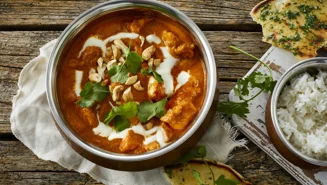
Yes, you can use halloumi in curry-style dishes instead of paneer, but the result will be noticeably different. Halloumi keeps its firm, chewy texture and pronounced saltiness, even after simmering, while paneer softens and absorbs the sauce it is cooked in. For this reason, halloumi works best in drier, thicker curries or dishes where the cheese is added towards the end, rather than cooked slowly for a long time. You will usually need to reduce or adjust the seasoning, as halloumi adds much more salt than paneer.
If this comparison has piqued your interest, there is plenty more to explore. You can take a closer look at how paneer compares to other ingredients in our articles about paneer vs tofu and paneer vs cottage cheese.
For those who want to start from the very beginning, our article “What is paneer?” covers everything from how it is made to cooking methods. And if you are ready to get cooking, our collection of paneer recipes is a great place to find inspiration for your next meal.